Actionbook
DOM and action guide layer for web agentsFaster agent actions with verified DOM data
Highlights
What you can do with it
- Speed up agent tasks like searching on dynamic sites
- Build agent programs that operate websites reliably
- Collect data from pages where traditional scraping fails
How to use it
- 1 Register on actionbook.dev with the free Get Started option.
- 2 Pick your LLM, agent framework, and browser automation tool.
- 3 Integrate Actionbook following the official documentation.
- 4 Configure the agent target site and steps, then run it.
- 5 Monitor the run and adjust the task as needed.
Who it is for
Pros
- Pre-built DOM data removes guesswork during agent runs
- Broad compatibility across models, frameworks, and tools
- Free version lets developers test integration at no cost
Limitations
- Speed and token savings are developer claims, not guarantees
- Integration still requires setup and documentation reading
- Free terms and coverage may change as the service develops
What Actionbook is
Actionbook is a tool that gives large language models the current DOM structure and action guidelines for websites. Agents that browse the web often struggle with dynamic pages, complex DOM trees, and streaming content, and Actionbook is built to solve those problems. Traditional scraping methods often fail on modern pages, and the tool is meant to fill that gap. By supplying pre-built action manuals and verified selectors, it lets an agent skip raw page analysis and move straight to acting. The makers state this makes agents act up to 10 times faster and cuts token usage sharply. It is designed to work with any LLM, agent framework, and browser automation tool, so one integration covers different stacks. A free version is currently offered, and the product is developed by Cue Labs Inc.
What you can do with it
- Give agents accurate DOM targets instead of guessed selectors
- Run agents on dynamic pages, SPAs, and streaming content
- Reduce the tokens spent analyzing page structure
- Handle modern web tech such as virtual DOM and single-page apps
Who it is for
- Developers building agent programs that operate websites
- Automation operators running agents across many sites
- Data collectors who work with dynamic or complex pages
What to watch out for
The speed and token-saving numbers are claims from the developer, so treat them as targets rather than promises and measure them in your own setup. Integration still takes effort: you need to choose your stack, read the documentation, and configure each task. Coverage depends on the action manuals being current, and a site that changes its layout can break an agent's path. Test on a small task before scaling to production workloads. The service is free to use now, but free terms and feature scope may change as the product develops.
FAQ
What is Actionbook?
It is a tool that provides LLMs with up-to-date DOM structures and action guidelines so agents can operate websites more reliably.
What does it work with?
It is designed to work with any large language model, agent framework, and browser automation tool.
Is there a free version?
Yes, Actionbook currently offers a free-to-use version for developers and automation operators.
Why it is free
What the official page says: 免费使用免费
Free limits, trial length and features are decided by the official site and can change at any time.
Product preview
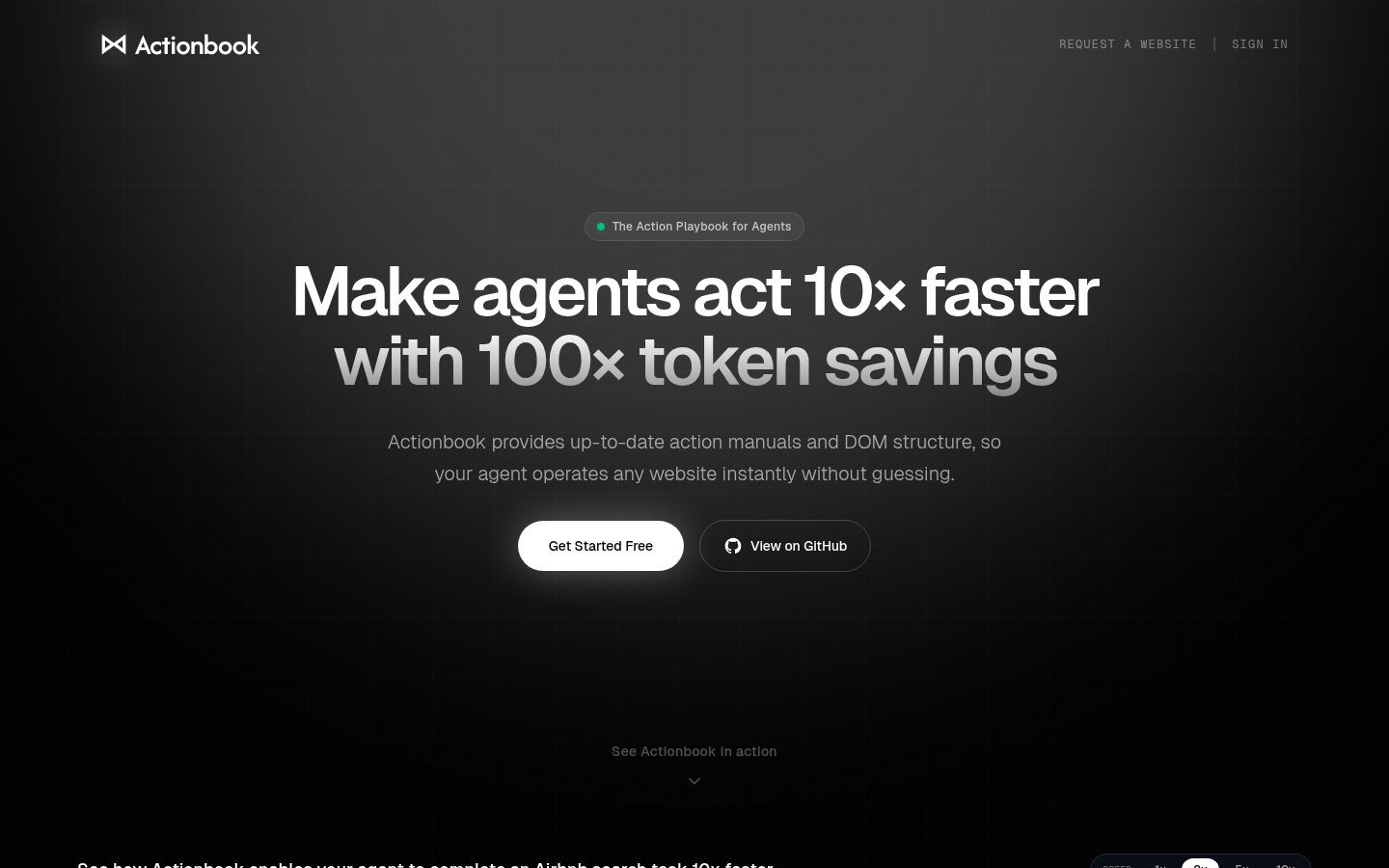
Screenshot archived from the listing page, for preview only.