Cure AI
PubMed search with ranked evidenceAsk in plain language, get ranked papers
Highlights
What you can do with it
- Running a literature review on a diabetes treatment question
- Finding studies on a medication's side effects before advising a patient
- Gathering thesis material and data support as a student
How to use it
- 1 Visit the Cure AI website and create an account
- 2 Type your research question in natural language
- 3 Review the ranked list of relevant literature
- 4 Open an article to read details and the abstract
- 5 Use advanced search to narrow by journal or publication date
- 6 Copy citations into your document and save what you need
Who it is for
Pros
- A free trial lets you test the workflow
- Plain language search lowers the query barrier
- Citation copying saves manual formatting
- Ranking surfaces higher quality journals first
Limitations
- Full access needs a paid plan after the trial
- Answers are only as good as the underlying literature
- Medical decisions still require professional judgment
- Coverage is limited to PubMed indexed material
What Cure AI is
Cure AI is a research assistant built specifically for medical researchers, sitting on top of PubMed with access to more than 26 million articles. Medical search is unusually unforgiving: a missed synonym or a wrong field tag can hide the paper that matters. The tool addresses that by accepting natural language questions, so you describe what you want to know rather than constructing a Boolean query.
Around that input model sit features aimed at the rest of the research loop. An evidence ranking feature orders what comes back, and the listing says articles from journals with a high h5 index are prioritized so the sources are more authoritative. Advanced search parameters let you specify a journal or a publication date when you need precision. Navigation is designed to be seamless, so you can move from a result list into abstracts and then into citations without losing your place, and a quick citation feature copies formatted references straight into your document. Personalized recommendations categorize and suggest relevant literature based on what you have been asking. A free trial is offered, with paid plans suited to different team sizes.
What you can do with it
- Ask a research question in plain language
- Read answers backed by ranked evidence
- Narrow results by journal or publication date
- Move from result list to abstract to citation quickly
- Copy formatted citations into your own document
- Receive recommendations based on your queries
Who it is for
- Medical and clinical researchers running reviews
- Clinicians checking evidence before a treatment decision
- Students assembling a thesis literature review
- Research teams that want a shared citation workflow
- Writers summarizing a body of published work
What to watch out for
A free trial is a trial: continued use for a team needs a paid plan, and pricing is not published in the listing. The tool summarizes and ranks published literature, which means it inherits the limits of that literature, including study quality, publication bias, and the gap between a paper and clinical practice. Ranking helps you find stronger sources, but it does not replace reading the paper. Coverage is PubMed based, so material outside that index will not appear. Nothing here substitutes for professional medical judgment on a real patient.
FAQ
How large is the database?
The listing states access to over 26 million PubMed articles.
Do I need to learn search syntax?
No. The tool is built around natural language queries, with advanced parameters available if you want them.
How does it rank results?
It uses an evidence ranking feature and prioritizes articles from journals with a high h5 index.
Is there a free option?
A free trial is offered, with paid plans for teams of different sizes.
Why it is free
What the official page says: free trial
Free limits, trial length and features are decided by the official site and can change at any time.
Product preview
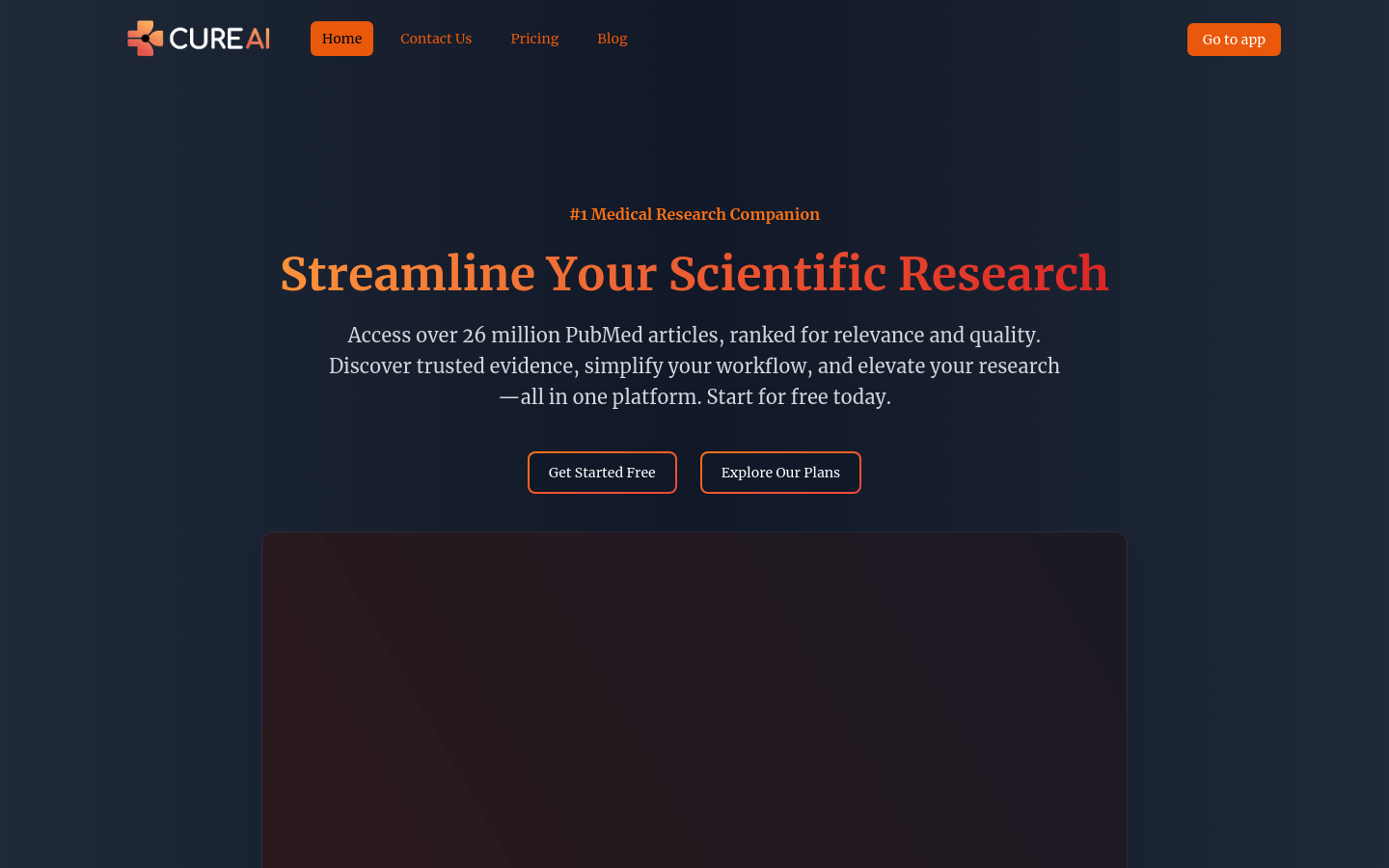
Screenshot archived from the listing page, for preview only.