FaceFinder ID
Reverse face search engineFind people and check identities by photo
Highlights
What you can do with it
- Verifying the identity of an online dating contact
- Finding unauthorised use of your own photos
- Searching for a current profile from an old photo
How to use it
- 1 Upload a clear photo of the person you want to find
- 2 Let the engine analyse facial features and scan the open web
- 3 Browse matching images and visit the source pages for more context
Who it is for
Pros
- Covers public records and social platforms in one search
- Privacy stance stated: no permanent photo storage, anonymous search
- Reports include source links rather than bare thumbnails
- Free trial to test result quality before paying
Limitations
- Free trial only, and the pricing system is not clearly stated
- Searching a person without consent raises privacy and legal issues
- Results are limited to what is publicly indexed, so coverage is uneven
- Face recognition is not proof of identity, and false matches happen
What FaceFinder ID is
FaceFinder ID is an AI reverse face search engine. You give it a photo and it scans websites, public records and social platforms for visual matches, then returns a report that includes image sources, social profiles, news articles and blog appearances. The listing stresses privacy: uploaded photos are not permanently stored and searches run anonymously. A free trial is offered, and the stated uses are verifying online dating contacts, checking whether a profile picture was stolen, protecting image rights and reconnecting with people from an old photograph.
What you can do with it
- Upload a photo and run a face search across the open web.
- Review matching images and follow the source links for context.
- Check whether a dating profile picture appears elsewhere under another name.
- Look for unauthorised use of your own images as a photographer or creator.
- Search for a current social profile from an older picture of someone.
Who it is for
- People who want to check an online contact before meeting in person.
- Photographers and influencers tracking where their images appear.
- Anyone trying to trace a person from an old photograph.
- Users who need a quick second look before sending money or sharing details.
What to watch out for
Searching for a person without their knowledge raises real privacy and legal questions, and in some places that use is restricted. Keep searches to people you have a legitimate reason to look up, such as your own images or a contact who claims to be someone else, and be aware that rules differ by country. Results depend on what is publicly indexed, so coverage is uneven and a clean result does not prove anything. Face recognition can also produce false matches, so treat output as leads to verify rather than proof of identity. The free trial is time limited and the pricing system is not clearly stated, so check the terms before relying on the service for anything important.
FAQ
How does the search work?
You upload a photo, the engine analyses the facial features and scans the open web, then returns matching images with source links.
Are my photos stored?
The listing says uploaded photos are not permanently stored and searches are anonymous.
What can I use it for?
Stated uses include verifying online contacts, checking for stolen profile pictures, protecting image rights and finding missing people.
Is it free?
A free trial is offered, but the pricing system is not clearly stated on the page.
Can I trust a match as proof of identity?
No. Treat results as leads to verify, not proof, since facial recognition can produce false matches.
Why it is free
What the official page says: free trial
Free limits, trial length and features are decided by the official site and can change at any time.
Product preview
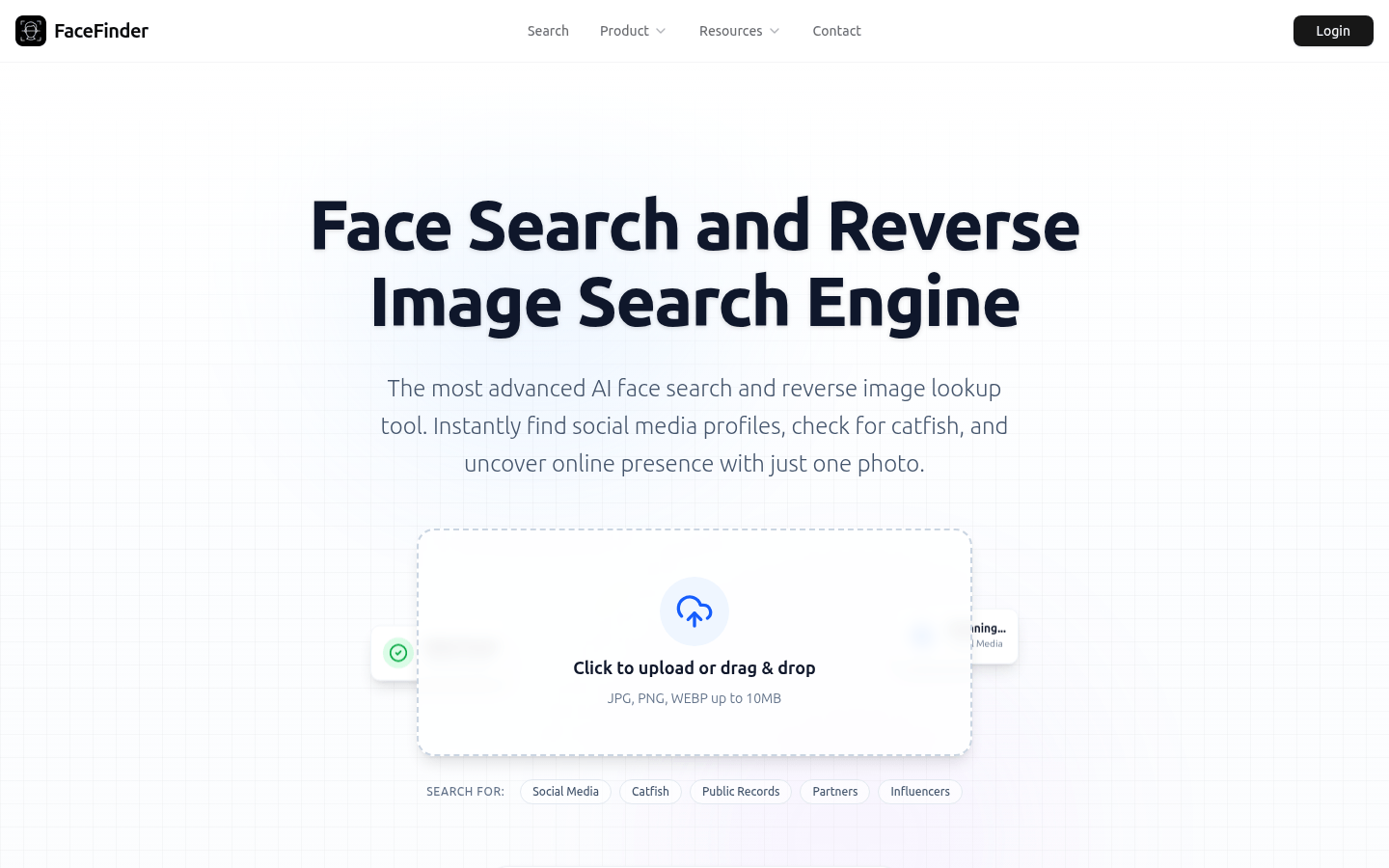
Screenshot archived from the listing page, for preview only.