l1m
LLM proxy API for structured data extractionPull structured data from text and images
Highlights
What you can do with it
- Extract dish names and prices from a restaurant menu image
- Pull key event years out of historical documents
- Read temperature and weather details from a weather report
How to use it
- 1 Define a JSON Schema for the data you want.
- 2 Prepare the input as text or a base64-encoded image.
- 3 Send an API request with the input, schema, and model headers.
- 4 Optionally set a cache time to cut repeat requests.
- 5 Receive and process the returned structured JSON.
Who it is for
Pros
- No prompt engineering, just a JSON Schema
- Open source, so no vendor lock-in
- Built-in caching and multi-language SDKs
Limitations
- Free trial only, with paid use for the hosted version
- Output quality depends on input clarity and schema design
- Caching stores data, so review it for sensitive inputs
What l1m is
l1m is a proxy API that uses large language models to extract structured data from unstructured text or images. The design is schema-first: instead of writing careful prompts, you define a JSON Schema that describes the fields you want, and the API returns structured JSON that matches. It supports multiple LLM models compatible with OpenAI or Anthropic, and it ships SDKs for languages such as Node.js, Python, and Go so developers can drop it into an existing stack. It is open source, which means you can run it yourself or use the hosted version, and it includes a caching layer that can store repeated requests to cut cost. A free trial is offered for teams that need clean data from messy input.
What you can do with it
- Extract structured fields from unstructured text
- Pull data such as menu items and prices from images
- Define the output shape with a JSON Schema
- Cache repeated requests to reduce overhead
Who it is for
- Developers turning messy documents into structured data
- Teams extracting fields from images such as menus and forms
- Engineers building data pipelines on top of LLMs
What to watch out for
The hosted version is a paid product with a free trial, and output quality depends on how clear the input is and how well you design the schema. Because caching stores data by design, review that feature before sending sensitive inputs. As with any LLM output, spot-check the extracted values before you feed them downstream, since the model can still misread ambiguous content. Generated suggestions are for reference only, so verify anything that affects professional judgment or important data.
FAQ
What is l1m?
It is a proxy API that uses LLMs to extract structured data from text or images, driven by a JSON Schema.
Do I need to write prompts?
No. You describe the structure with a JSON Schema instead of writing complex prompts.
Is it open source?
Yes. You can use the open-source version or the hosted version.
Why it is free
What the official page says: free trial
Free limits, trial length and features are decided by the official site and can change at any time.
Product preview
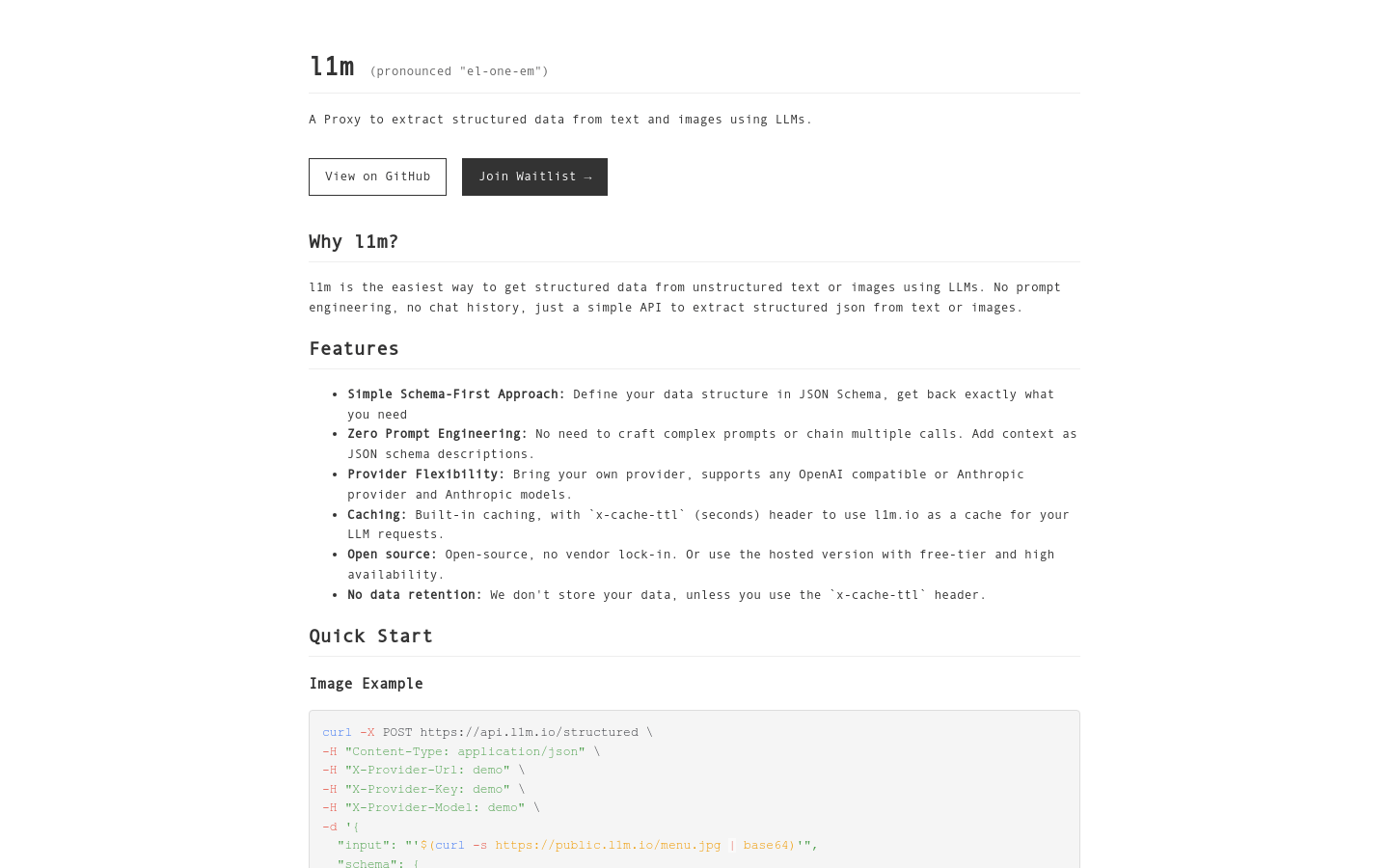
Screenshot archived from the listing page, for preview only.