NLTK
Python natural language processing toolkitLibraries and corpora for language work in Python
Highlights
What you can do with it
- Tokenize text and run part-of-speech tagging
- Build a text classification experiment
- Run named entity recognition and semantic reasoning
How to use it
- 1 Install Python and add NLTK
- 2 Download the corpora and lexical resources you need
- 3 Load your text data into the toolkit
- 4 Apply processing steps such as tagging or parsing
- 5 Use the discussion forum when you get stuck
Who it is for
Pros
- Free and open source
- Large set of corpora and resources
- Covers the core NLP task list
- Active community forum
Limitations
- Requires Python knowledge to use well
- Academic style, so the learning curve is real
- Some tasks need extra libraries beyond the core toolkit
- Project scope is broad, so documentation is spread out
What NLTK is
NLTK is a Python platform for working with human language data. It gives you an interface to more than fifty corpora and lexical resources, including WordNet, together with libraries for classification, tokenization, part-of-speech tagging, parsing, and semantic reasoning. It also wraps industrial-grade NLP components and hosts an active discussion forum. The toolkit is free to use and is an open-source, community-driven project. It is one of the standard environments for teaching and experimenting with language processing in Python.
What you can do with it
- Split text into tokens and tag parts of speech.
- Run named entity recognition over documents.
- Classify text by topic, sentiment, or label.
- Parse sentence structure and reason about meaning.
- Reach for WordNet and other lexical resources directly.
Who it is for
- Linguists analyzing language data.
- Engineers prototyping NLP pipelines.
- Students and educators learning the field.
- Researchers and industry users running language experiments.
What to watch out for
NLTK assumes you can write Python. It is an academic toolkit with a real learning curve, and some tasks need additional libraries beyond the core package. Documentation is broad because the project covers many tasks, so expect to read and experiment. The community forum is the best place to get unstuck, and answers improve when you bring a small reproducible example. When quality matters, export a small draft first to confirm the result before producing the final file. Generated suggestions are for reference only, so verify anything that affects professional judgment or important data. Save a backup of the original file before large batch jobs, and keep an exported copy of key results in case the page or service becomes temporarily unavailable.
FAQ
Is NLTK free?
Yes, NLTK is free to use and is an open-source, community-driven project.
What does it provide?
Access to over 50 corpora and lexical resources plus text processing libraries.
Who is it for?
Linguists, engineers, students, educators, researchers, and industry users.
Why it is free
What the official page says: free to use
Free limits, trial length and features are decided by the official site and can change at any time.
Product preview
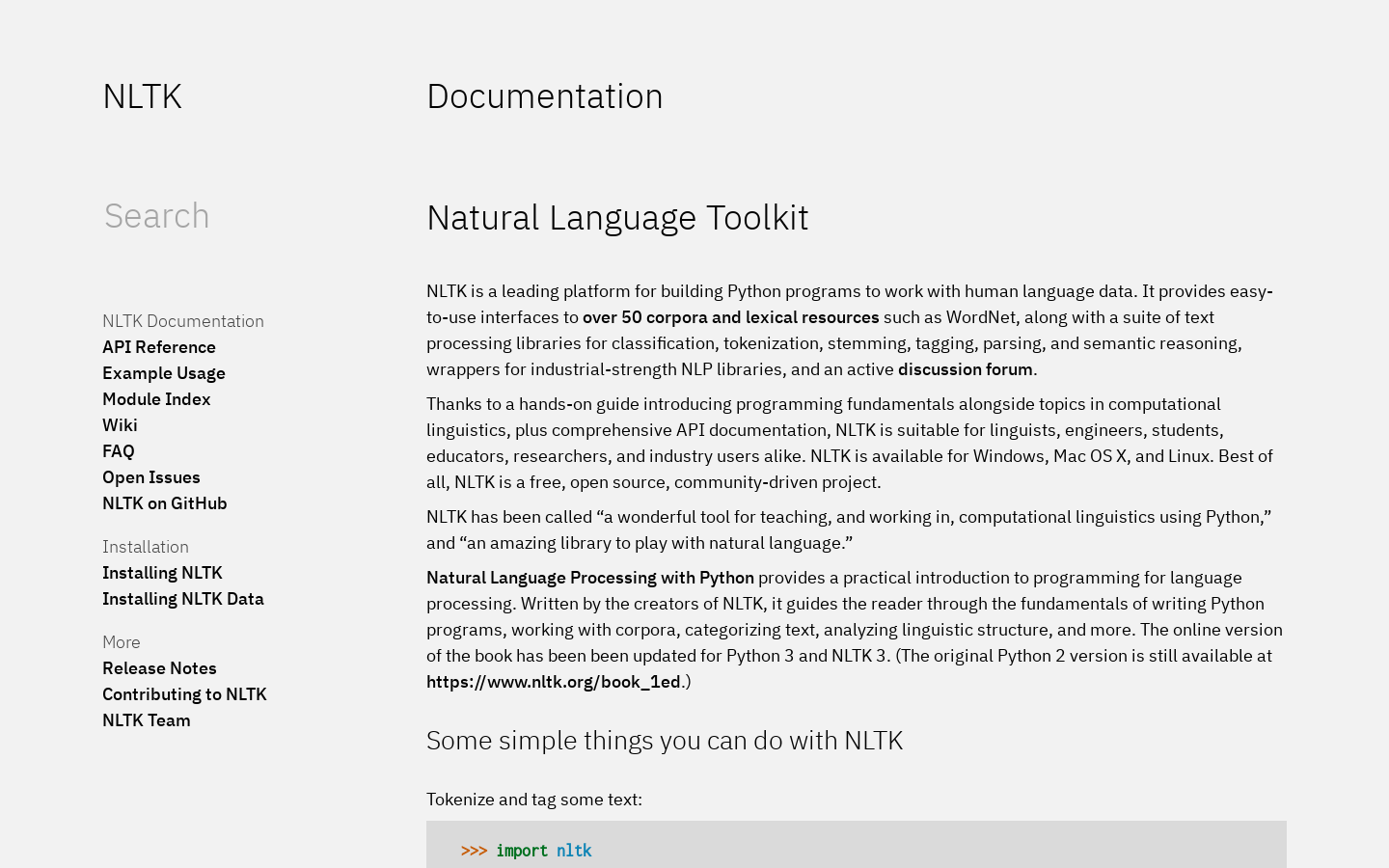
Screenshot archived from the listing page, for preview only.