Polymer DLP
Data security posture management for SaaS and AISee and control sensitive data across SaaS and AI
Highlights
What you can do with it
- Healthcare organizations protecting patient data for HIPAA compliance
- Financial services controlling employee and AI access to customer data
- Enterprises monitoring sensitive data across many SaaS applications
- Teams surfacing shadow AI usage and misconfiguration through risk scores
How to use it
- 1 Visit the official site and submit a demo request.
- 2 Review the demo against your own security and compliance needs.
- 3 Register and deploy with the Polymer team.
- 4 Create context-driven security policies that reflect your AI usage.
- 5 Group human and non-human identities and set how each interacts with data.
- 6 Detect, classify, and label data, then review risk reports and correct violations.
Who it is for
Pros
- Covers both human and AI access to data
- Automated correction of violations at runtime
- Audit logs mapped to HIPAA, SOC 2, CCPA, and GDPR
- Risk scores make exposure visible to the business
Limitations
- Pricing is not published, so evaluation needs a sales conversation and any trial terms must be confirmed
- Built for enterprise-scale environments, so small teams may find it heavy
- Deployment depends on connecting SaaS and AI systems properly
- Policy setup is real security work, not a switch you flip
What Polymer DLP is
Polymer is a data security posture management platform, or DSPM, built for the way companies now store data across SaaS applications and AI workflows. Instead of guarding one perimeter, it watches sensitive data where it lives: in critical business SaaS apps and in AI processes that generate and read it. The platform detects, classifies, and labels data continuously, manages how both employees and AI systems access that data, and quantifies risk through assessment reports and risk scores. When a policy is broken, it can correct the violation at runtime, for example by editing sensitive data, revoking file access, or triggering a workflow. It also generates audit logs that map to frameworks such as HIPAA, SOC 2, CCPA, and GDPR.
What you can do with it
- Create context-driven security policies that reflect your own AI usage and business needs.
- Group human and non-human identities and control how each interacts with data.
- Detect, classify, and label data in motion and at rest.
- Surface risks such as shadow AI usage, insider threats, and misconfiguration through scores and reports.
- Correct violations automatically and keep audit evidence for compliance.
Who it is for
- Healthcare organizations that must protect patient information and stay HIPAA compliant.
- Financial services and insurance companies that handle large volumes of customer data.
- Enterprise teams that run many SaaS applications and AI workflows and need one view of exposure.
- Security teams that need audit logs and evidence for regulators.
What to watch out for
Pricing is not published on the page, so this is a sales-led product rather than a self-serve purchase, and evaluation means a demo request and a conversation with the team; confirm any trial terms and scope in writing. It is aimed at enterprise-scale environments, so a small team with a couple of SaaS apps may find the platform heavier than its needs. Deployment is not a switch you flip: policies, identity groups, data classification, and integrations across SaaS and AI systems all need to be set up and maintained by people who understand your data. Finally, like any security layer, it reduces risk rather than removing it, and results depend on how carefully policies are written and how quickly alerts are acted on.
FAQ
What is Polymer?
A data security posture management platform that protects sensitive data across SaaS applications and AI workflows.
Who is it for?
Healthcare, financial services, insurance, and enterprise teams that handle sensitive data at scale.
Does it cover AI access to data?
Yes. It groups human and non-human identities and controls how each interacts with data.
How is it priced?
The page does not list pricing. Entry starts with a demo request, and terms are discussed with the team.
Why it is free
What the official page says: free trial
Free limits, trial length and features are decided by the official site and can change at any time.
Product preview
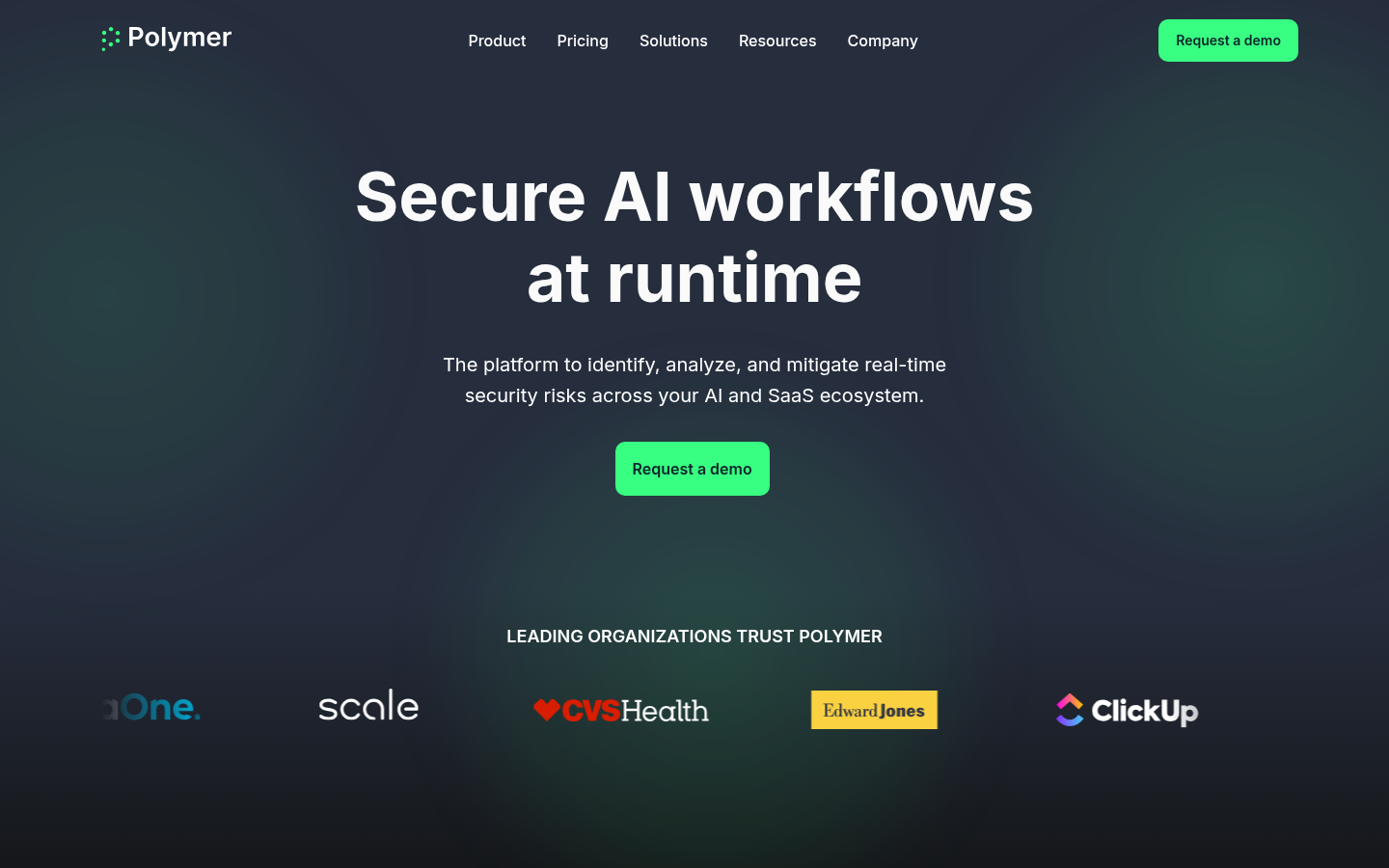
Screenshot archived from the listing page, for preview only.