Seaml.es
AI assistant for writing literature reviewsTurn papers into a literature review draft
Highlights
What you can do with it
- A researcher pulls information from a paper set and drafts a review
- A graduate student tightens and proofreads a review before submission
- An academic institution speeds up review writing across a team
How to use it
- 1 Create an account and start with the free trial credits
- 2 Upload or select the literature you want to work from
- 3 Let the tool extract information and build a draft
- 4 Edit and proofread the draft using the built-in tools
- 5 Upgrade to Pro if you need more credits or better models
Who it is for
Pros
- Automates the slow part of review work: extraction and first drafts
- Built-in editing and proofreading reduce tool switching
- You can try it with 3 free credits before paying
Limitations
- Only 3 free credits, so the trial is enough to test rather than finish a full review
- The domain is very new, so long-term reliability is unproven
- Generated drafts still need careful human checking for accuracy and citation
- Pro pricing and credit rules can change
What Seaml.es is
Seaml.es is an AI-powered writing assistant aimed squarely at literature reviews. Instead of a general chatbot, it follows the shape of the actual task: you point it at relevant literature, it extracts the information that matters, and it builds a draft you can then edit. Editing and proofreading functions are part of the same workflow, so you are not moving text between separate tools to clean it up. The pitch is time saved on the reading and summarizing stage, which is usually the slowest part of a review. A free trial of 3 credits lets you test the process, and the Pro version adds more credits plus higher-quality models.
What you can do with it
- Extract key information from a set of papers
- Build a structured literature review draft from that material
- Edit and proofread the draft in the same tool
- Move to Pro when you need more credits or stronger models
Who it is for
- Graduate students who have to produce reviews on a deadline
- Researchers summarizing a large body of prior work
- Academic institutions that want to standardize how reviews get drafted
What to watch out for
Three credits is a small allowance. It is enough to see whether the extraction and drafting style suits you, but a full review will need the paid plan, so budget accordingly. The domain is also very new, which means there is little track record to judge stability or support quality against. Most importantly, the output is a draft: extracted claims, numbers, and citations should be checked against the original papers before anything is submitted, because an AI summary can flatten nuance or drop context that matters in academic writing. Credit pricing and Pro terms can change, so verify before committing.
FAQ
How many free credits do I get?
The free trial includes 3 credits. That is enough to test the workflow, not to complete a long review.
What does the Pro version add?
More credits and access to higher-quality models, according to the product description.
Can I trust the extracted information?
Treat output as a draft. Verify facts, figures, and citations against the original papers.
Why it is free
What the official page says: free trial
Free limits, trial length and features are decided by the official site and can change at any time.
Product preview
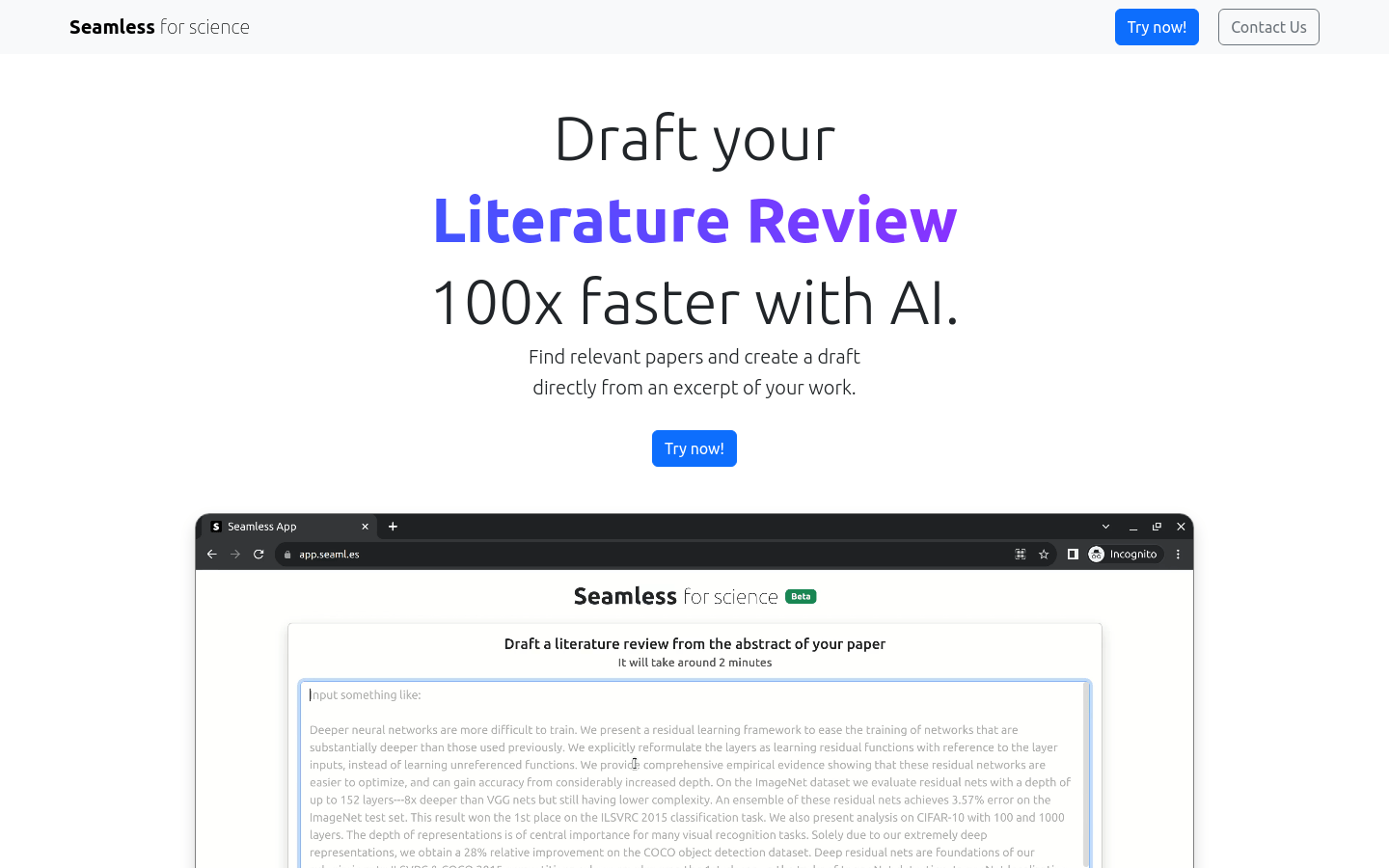
Screenshot archived from the listing page, for preview only.