Eko
Open-source agent framework for developersBuild agent workflows with natural language
Highlights
What you can do with it
- Build a browser extension that analyzes stock data
- Create a desktop tool that cleans up large files
- Analyze competitors and write and publish a marketing blog
How to use it
- 1 Read the Eko documentation to learn the basics
- 2 Choose a language model and initialize an Eko instance
- 3 Describe the task in natural language to generate a workflow
- 4 Adjust nodes and tool parameters as needed
- 5 Run the workflow and refine it based on results
Who it is for
Pros
- Open source and free at the core
- Flexible mix of natural language and code
- Built-in tools and multi-model support
Limitations
- It is a developer framework, so expect a learning curve
- Some advanced features or services may require payment
- As an open-source project, maintenance and updates are not guaranteed
What Eko is
Eko is an open-source intelligent agent framework for developers, created by the FellouAI team. It lets you build agent workflows using a mix of natural language and code, covering everything from simple commands to complex, multi-step processes. It ships with built-in tools such as web content extraction, command execution, and file export, and you can add your own custom tools to extend it. It uses hierarchical planning that separates offline planning from execution, so task plans stay reusable and easy to modify. It supports multiple large language models such as ChatGPT and Claude 3.5, letting you switch as needed.
What you can do with it
- Design agent workflows with natural language and code
- Use built-in tools for web extraction, commands, and files
- Add custom tools to extend the framework
- Run on browsers and desktop environments
Who it is for
- Developers automating browser or desktop tasks
- Teams building production agent workflows
- Anyone combining LLMs with custom tools
- Developers who want flexible planning and execution
What to watch out for
It is a developer framework, so expect a learning curve; you will get the most from it if you are comfortable reading documentation and writing some code. The core is open source and free, but some advanced features or customization services may require payment, and those terms can change. As with any open-source project, maintenance and updates are not guaranteed, so pin versions and do not build critical systems on unreviewed changes. Test workflows carefully before you let agents take real actions. When quality matters, export a small draft first to confirm the result before producing the final file.
FAQ
Is Eko free?
It is open source, so the core framework is free, though some advanced features or services may require payment.
Do I need to code?
You can mix natural language and code, so basic workflows are possible without heavy coding, but it is built for developers.
Which models does it support?
It supports multiple LLMs such as ChatGPT and Claude 3.5.
Why it is free
What the official page says: for free
Free limits, trial length and features are decided by the official site and can change at any time.
Product preview
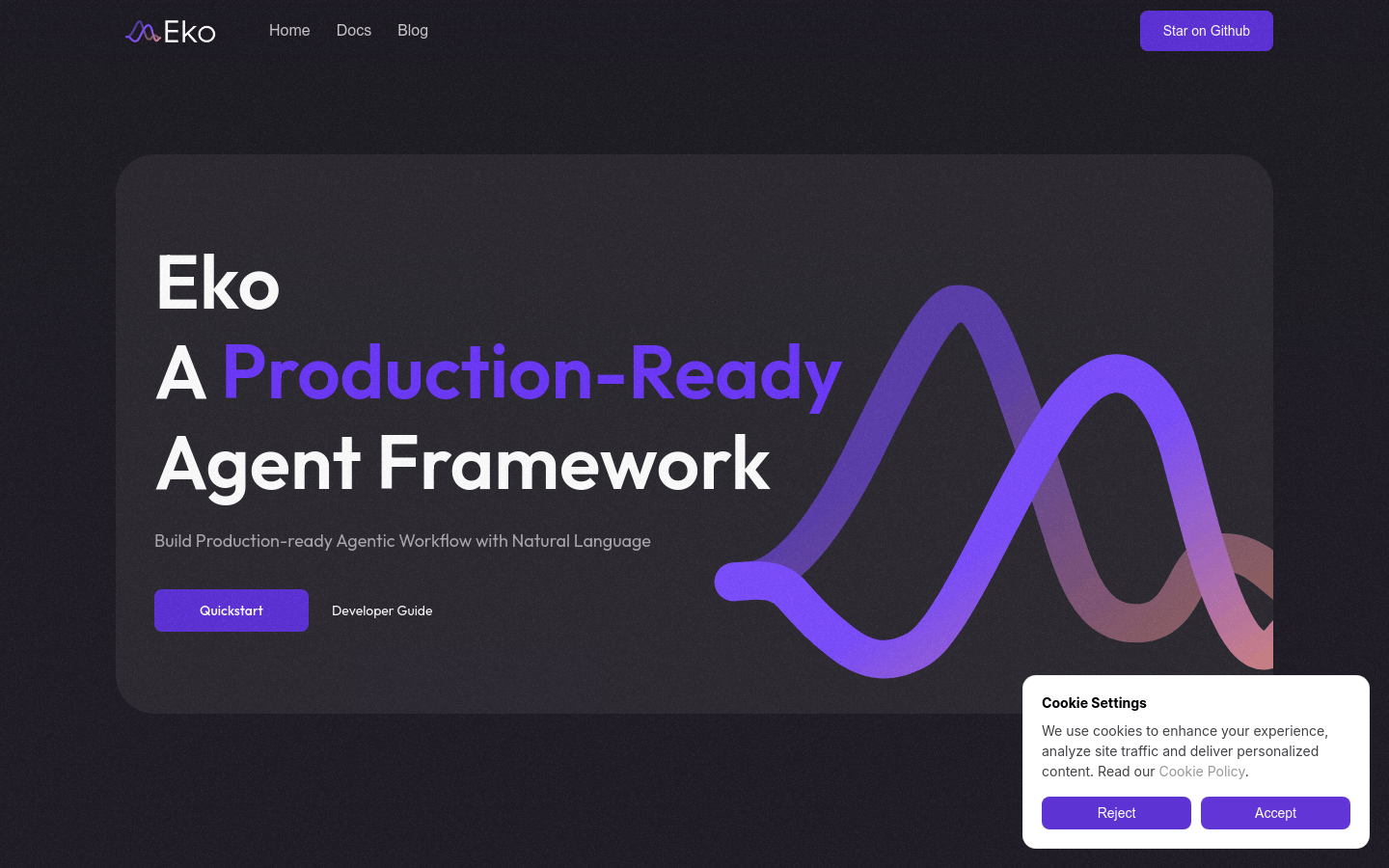
Screenshot archived from the listing page, for preview only.