Lingyun Open Platform
Free AI capability API platformSpeech, vision, and language APIs for developers
Highlights
What you can do with it
- Adding voice input to a mobile app
- Building speech recognition into a smart device
- Using OCR to read text from images
How to use it
- 1 Open the Lingyun Open Platform
- 2 Choose the capability you need, such as ASR or OCR
- 3 Integrate the API into your application
- 4 Test with your own audio, image, or text data
- 5 Deploy the feature in your product
Who it is for
Pros
- Free access to a wide capability set
- Covers speech, vision, and language in one platform
- Real world usage cited by large consumer companies
Limitations
- Free access rules and quotas may change
- Documentation and support are mostly region specific
- Integration work still sits with your engineering team
What the Lingyun Open Platform is
The Lingyun Open Platform is a developer platform that packages intelligent human machine interaction capabilities behind APIs. The listing describes the set as free for developers and fairly wide: text to speech, speech recognition, handwriting recognition, optical character recognition, natural language understanding, machine translation, voice wake up, microphone array processing, and face recognition. The target is applications and hardware that need to hear, see, or read. That covers mobile apps, smart home appliances, smart automotive systems, smart speakers, and robots, which is the same list the platform gives as its audience. Real world usage cited in the listing includes product search, voice navigation, and voice input at large consumer companies.
What you can do with it
- Add speech recognition to an application
- Convert text to speech for a device or app
- Read text from images with OCR
- Use natural language understanding and translation
Who it is for
- Mobile app developers adding voice or vision features
- Smart hardware teams building connected devices
- Robotics and automotive product teams needing perception
What to watch out for
Free access is the current arrangement, and free API terms and quotas can change, sometimes with little notice, so design your product so a pricing shift is not fatal. The listing's examples and documentation lean toward a Chinese language ecosystem, so support and integration quality may vary depending on your region and language. Capability quality also differs by feature; handwriting and face recognition are harder problems than basic speech to text. Finally, the integration work is yours: the platform provides the capability, but plumbing it into your product still takes engineering time.
FAQ
What capabilities does the platform offer?
Text to speech, speech recognition, handwriting recognition, OCR, natural language understanding, machine translation, and more.
Is it free?
The listing describes the capabilities as offered to developers for free.
Who uses it?
The listing cites JD Group for product search, Didi Chuxing for voice navigation, and Baidu Input Method for voice input.
What devices does it target?
Mobile apps, smart home appliances, smart automotive, smart speakers, and robots.
Why it is free
What the official page says: 免费
Free limits, trial length and features are decided by the official site and can change at any time.
Product preview
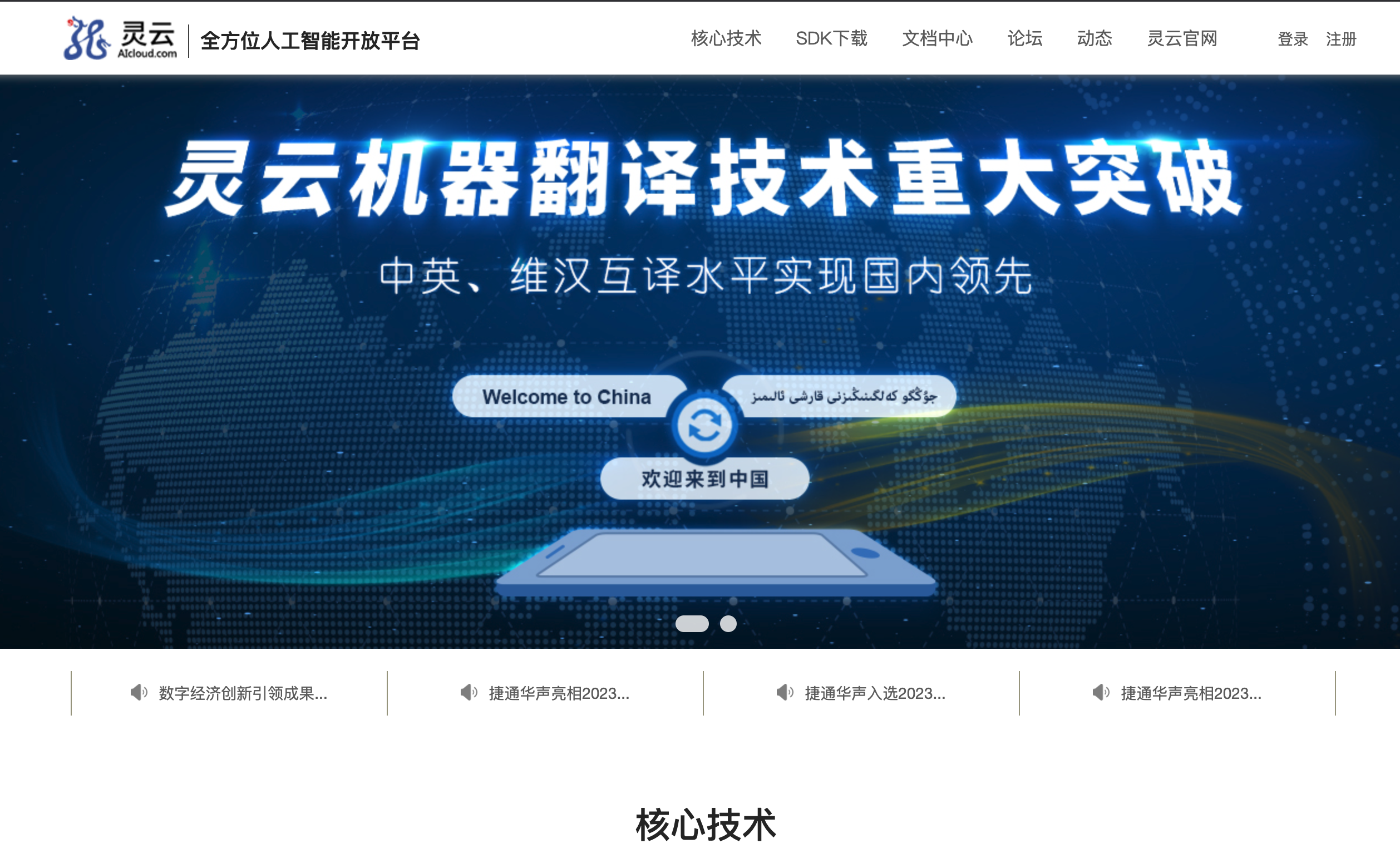
Screenshot archived from the listing page, for preview only.