Old English Translator
Free AI translator for Old EnglishModern English to Anglo Saxon, no sign up needed
Highlights
What you can do with it
- A student translates course material for an Anglo Saxon paper
- A novelist writes dialogue and oaths for a historical setting
- A historian reads an Old English charter in modern English
How to use it
- 1 Paste or type modern English into the input box; no account is needed.
- 2 Click translate and the tool returns Old English wording.
- 3 Copy the result for writing, study or research.
- 4 Switch the direction if you want to read Old English in modern English.
Who it is for
Pros
- Free with no registration step
- Works in both directions
- Extra languages beyond Old English
- Aims to keep the historical flavour of the wording
Limitations
- Machine output still needs checking against a real dictionary or grammar book for academic work
- Free access with no registration can change at any time
- Old English resources are limited, so rare words may come out loosely
- It suits short texts and phrases better than long technical documents
What Old English Translator is
Old English Translator is an AI driven translation tool that works with Old English, also called Anglo Saxon. You type modern English and it returns Old English wording, and you can switch the direction to read Old English in modern English. It is free to use and needs no registration. The tool tries to keep the meaning of your text while producing forms that fit the historical setting. It also lists other language options such as Shakespearean English, Old Norse and Aramaic, and shows common phrases including lines from Beowulf and the Lord's Prayer so you can see the style of the output. The aim is to give people who need Old English wording quickly a starting point they can edit.
What you can do with it
- Translate modern English into Old English and back again
- Work with extra options such as Shakespearean English, Old Norse and Aramaic
- Check common phrases and examples in Old English
- Copy results straight into writing, study or research notes
Who it is for
- Students and scholars working on Anglo Saxon topics
- Writers of historical fiction, scripts and tabletop settings
- Historians and researchers reading older records
- Language enthusiasts tracing English back to its roots
What to watch out for
Old English is a small corpus, so machine output can be loose with rare words and inflections. For coursework or published work, check every line against a proper grammar and dictionary rather than trusting the result. The free access without registration is a current offer and may change. Short phrases and sentences give cleaner results than long technical passages, and you should expect to edit the wording before it reads like real period language.
FAQ
Do I need an account to translate?
No. The tool states it can be used for free without registration.
Can it translate Old English into modern English?
Yes. Translation runs in both directions.
What else can it translate?
It also lists options such as Shakespearean English, Old Norse and Aramaic.
Is the output reliable for a thesis?
Treat it as a starting point and check results against a proper Old English dictionary and grammar before you submit.
Why it is free
What the official page says: no registrationfree of chargefree to use
Free limits, trial length and features are decided by the official site and can change at any time.
Product preview
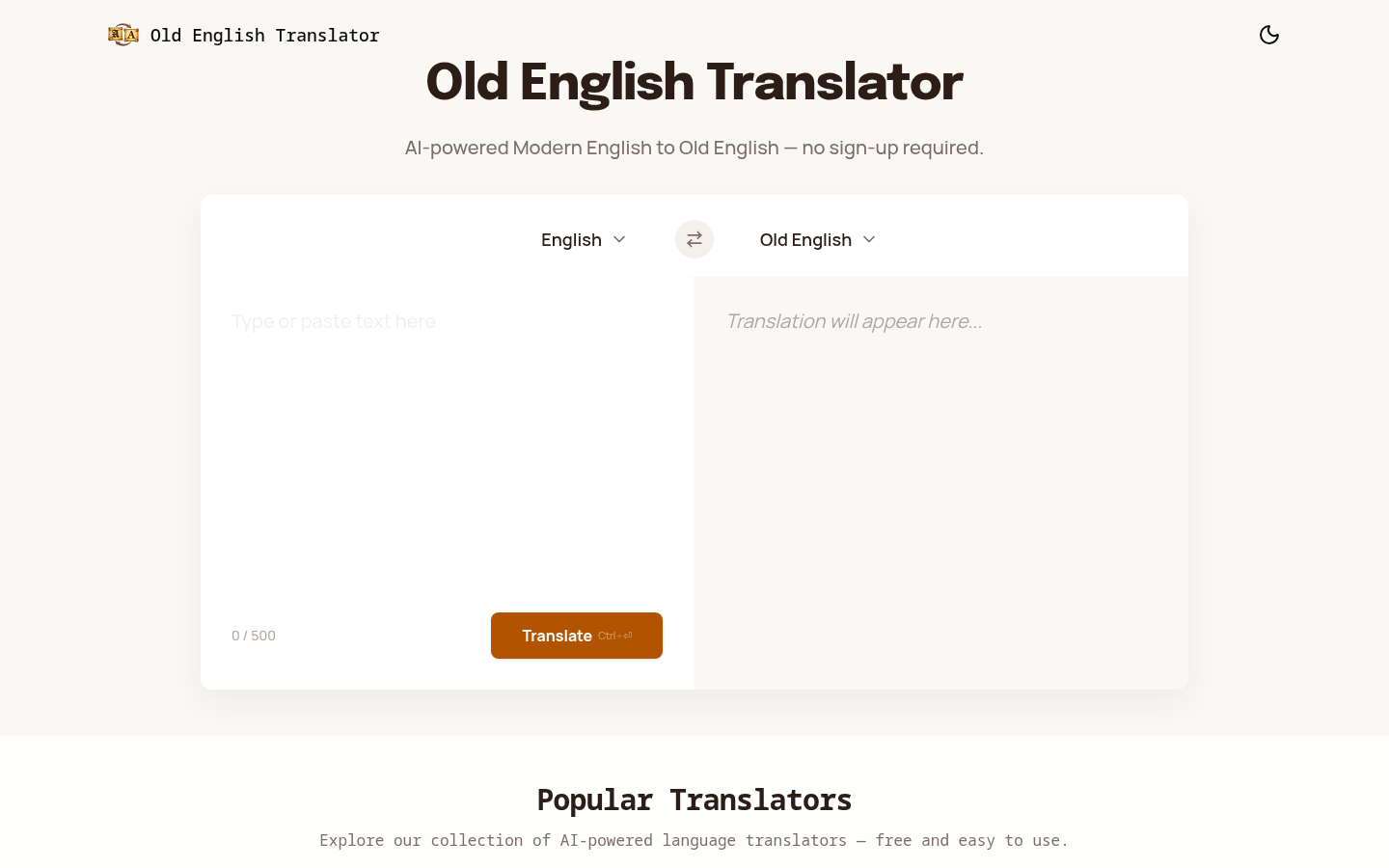
Screenshot archived from the listing page, for preview only.