Parseium
AI-built web scrapers with structured outputTurn websites into structured data
Highlights
What you can do with it
- Pull product and price information from supplier or competitor sites
- Extract tables and links from pages for research
- Move scraped data into an internal tool through the API
How to use it
- 1 Register and log in at the Parseium site.
- 2 Start with a free tool or build a custom crawler with AI.
- 3 Configure the target URL and the fields you want extracted.
- 4 Run the crawler and wait for extraction to finish.
- 5 Convert the output to structured data and integrate it through the API.
Who it is for
Pros
- No coding needed to build a crawler
- Structured output plus an API for downstream use
- A set of free utilities for quick one-off jobs
Limitations
- Web scraping can conflict with a site's terms of service and with local law, so check permissions first
- Full pricing is not confirmed in the listing, only a free trial
- Anti-bot protections change often, so crawlers need ongoing maintenance
What Parseium is
Parseium is a web scraping and data extraction platform where the crawler is assembled by AI rather than written by hand. You point it at what you need, it builds the extraction, pulls the data out of the target site, and organizes the result into a structured form that is easier to analyze or pipe somewhere else. An API handles the handoff into your own application.
It also carries a set of smaller free tools: an HTTP request analyzer, a link extractor, a meta tag extractor, and a table extractor. Those are useful on their own for quick jobs that do not justify building a crawler at all. The listing notes a free trial but leaves full pricing unconfirmed, so treat cost as something to check rather than assume.
What you can do with it
- Build a custom crawler with AI instead of writing scraping code.
- Extract data from complex or dynamic pages.
- Convert raw page content into structured, analyzable data.
- Push extracted data into your own application through the API.
Who it is for
- Data analysts who collect website data on a recurring basis.
- Market researchers tracking competitor pages and pricing.
- Developers who need scraped data inside a product rather than in a spreadsheet.
What to watch out for
Scraping sits in a legal and ethical grey zone that the tool cannot resolve for you. Sites publish terms of service, robots directives, and rate limits for a reason, and ignoring them can get your access blocked or expose you to a claim. Collect only what you are permitted to use, and prefer official APIs where one exists.
Technically, crawlers are brittle. A site redesign or a new anti-bot layer can break an extraction that worked last week, so budget for maintenance rather than treating it as set-and-forget. Pricing is not confirmed in the listing, so establish the real cost before you build a workflow that depends on it.
FAQ
Do I need to code?
The product is positioned as no-code: AI builds the crawler and the API handles integration into your application.
Is it free?
The listing mentions a free trial plus several free helper tools. Full pricing is not confirmed, so verify on the site.
What can it extract?
Anything the crawler is configured to pull, converted into structured data. The listing highlights complex and dynamic sites as a target.
Is scraping always allowed?
No. Respect robots directives, site terms, and applicable law, and only collect data you are permitted to use.
Why it is free
What the official page says: free trial
Free limits, trial length and features are decided by the official site and can change at any time.
Product preview
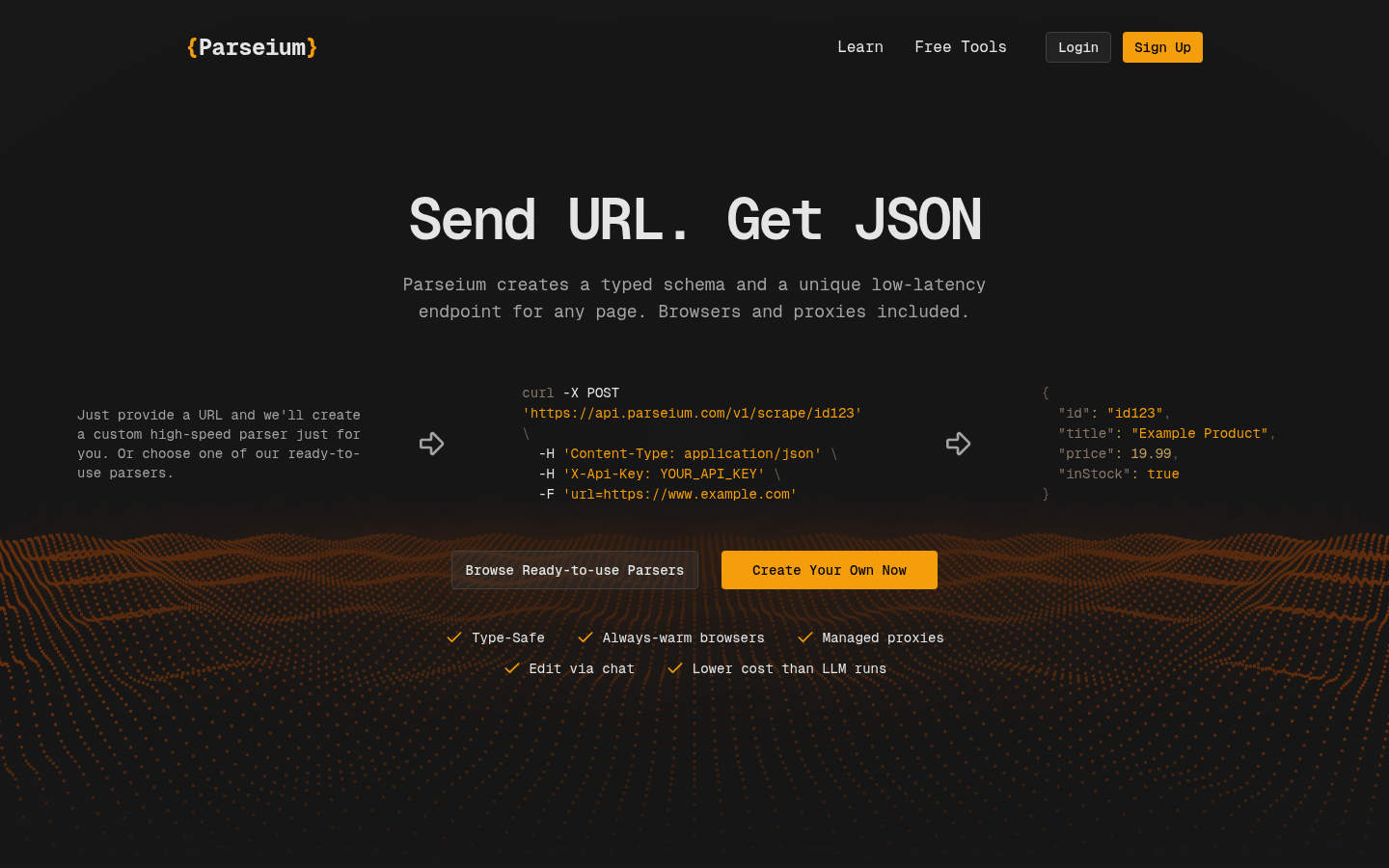
Screenshot archived from the listing page, for preview only.