Struct
Automated on-call investigation for engineering teamsRoot causes from logs, metrics, traces, and code
Highlights
What you can do with it
- An internet company triages a wave of alerts and finds root causes faster
- A fintech team keeps customer data secure while speeding up response
- A development team manages the whole stack from one place
How to use it
- 1 Register an account on the Struct website
- 2 Connect tools such as Sentry, Datadog, Slack, and GitHub
- 3 Let Struct investigate alerts automatically and review the root cause
- 4 Dig deeper through evidence, timeline, and commit history
- 5 Create a pull request or hand the task to a coding agent
Who it is for
Pros
- Automation removes repetitive triage work from alerts
- Evidence and timelines make conclusions easier to check
- Compliance posture suits regulated environments
Limitations
- Integrations must be configured before investigations are useful
- Higher usage tiers reach up to $200 per month
- Findings depend on the quality of the connected logs and traces
- Automated fixes still need human review before merging
What Struct is
Struct is a tool for automatically working on-call problems, and it is backed by Y Combinator. When an engineering alert appears, it pulls together logs, metrics, traces, and the codebase, then investigates the issue and reports a root cause along with impact analysis and a recommended repair. Instead of jumping between dashboards, engineers get one investigation view with the evidence attached. Data is logically isolated, is not used for training, and the service states SOC2 and HIPAA compliance. Access includes a free version, with professional plans starting at $20 per month and enterprise options for larger teams.
What you can do with it
- Connect observability and alert platforms, cloud log providers, and work tools within minutes.
- Let Struct investigate each alert automatically and return a root cause with impact analysis.
- Review the evidence, test alternative hypotheses directly in Slack, and follow the event timeline and commit history.
- Build on-call intelligence from past incidents so repeat problems are resolved faster.
- Push a clean pull request for the fix, or hand the task to a coding agent with complete context.
Who it is for
- Fast-growing teams where every hour of incident time slows the roadmap.
- Engineers and on-call staff who handle a steady stream of alerts.
- Organizations in regulated spaces that need logical isolation and compliance.
What to watch out for
Investigations are only as good as the connected data, so incomplete logs or missing traces will limit what Struct can conclude. Setup requires wiring up the right integrations first, which takes effort before the automation pays off. Higher tiers reach up to $200 per month, so teams should match the plan to real alert volume. Automated fixes are suggestions, not verified changes, and pull requests should go through normal review before merging.
FAQ
How is it priced?
There is a free version, a professional plan at $20 per month, a popular plan up to $200 per month, and an enterprise option.
What about data security?
Data is logically isolated, is not used for training, and the service states SOC2 and HIPAA compliance.
Which tools does it connect to?
It supports observability and alert platforms, cloud log providers, and work tools such as Sentry, Datadog, Slack, and GitHub.
Can it fix issues directly?
It can create pull requests or hand tasks to a coding agent with full context.
Why it is free
What the official page says: free version
Free limits, trial length and features are decided by the official site and can change at any time.
Product preview
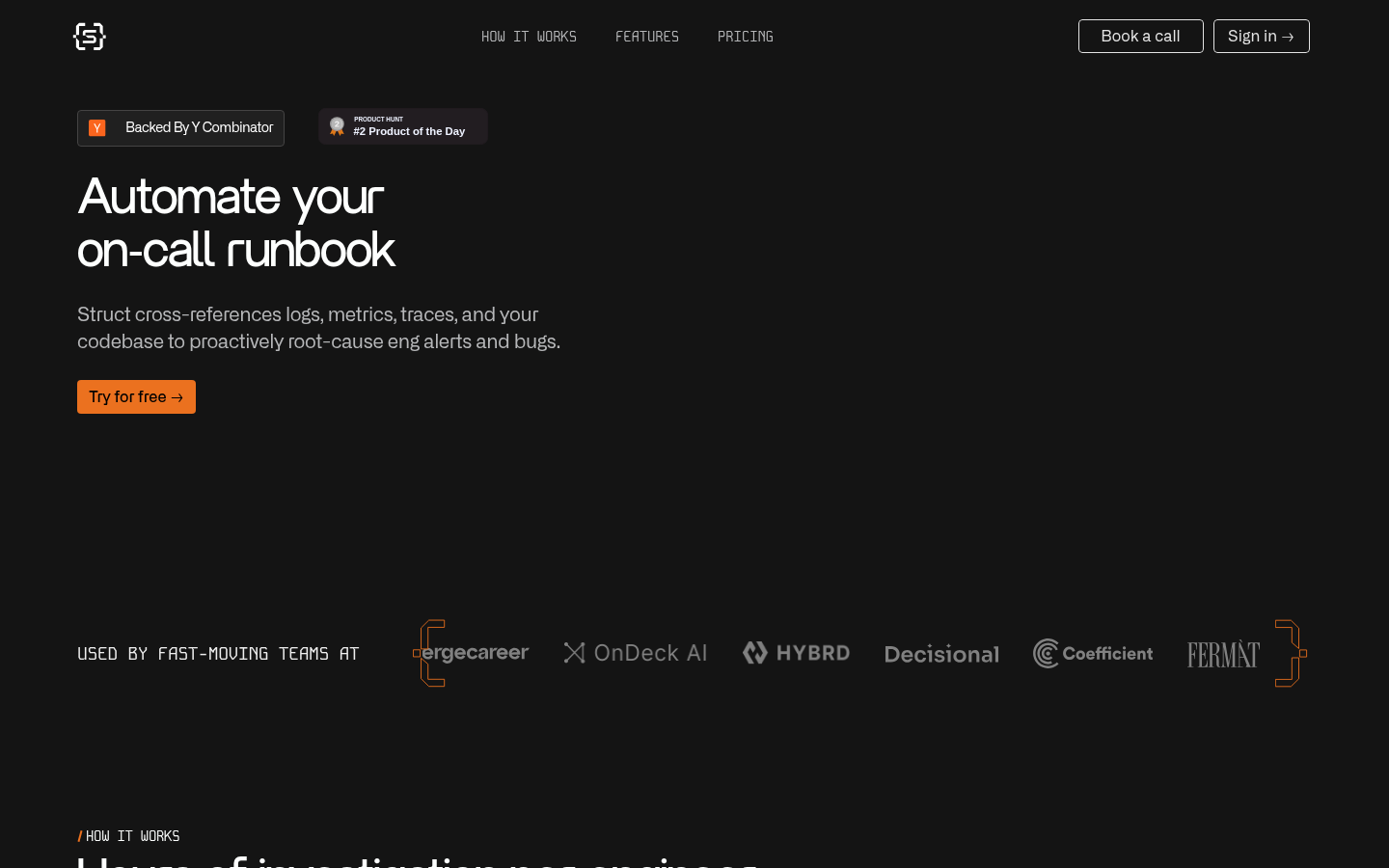
Screenshot archived from the listing page, for preview only.