Zep
Memory layer for enterprise AI agentsContext graphs, fast retrieval, compliance
Highlights
What you can do with it
- Track portfolios, market trends, and client preferences in finance
- Give service agents memory of past customer interactions
- Follow project progress and task allocation
How to use it
- 1 Register an account on the Zep website
- 2 Create projects, users, graphs, and batches
- 3 Import chat history, business data, and interactions
- 4 Build and manage context graphs via the API or tools
- 5 Retrieve context for your agents and apply access controls
Who it is for
Pros
- Sub-200ms retrieval regardless of graph size
- Compliance features including auditing and retention
- Free tier available for evaluation
Limitations
- Free tier limits are not detailed in the listing
- Building useful graphs requires real data engineering work
- Compliance claims should be validated against your own requirements
What Zep is
Zep is a context engineering and agent memory platform built for enterprise AI agents. Instead of stuffing everything into a prompt, it builds context graphs that track facts over time from every source an agent touches. Retrieval is designed to stay under 200 milliseconds no matter how large or numerous the graphs are, and automated context assembly means agents get relevant, token-efficient information without manual wiring. When new information contradicts what the graph already holds, Zep invalidates the old facts so agents reason on current data. Governance features include access control, retention policies, and auditing applied per graph and per query, and the vendor cites SOC 2 compliance and verification by S&P Market Intelligence. A free tier is available.
What you can do with it
- Build context graphs from chat history and business data
- Retrieve relevant context in under 200 milliseconds
- Automate context assembly for agent responses
- Invalidate outdated facts when new data conflicts
- Apply access control, retention, and auditing policies
Who it is for
- Enterprise AI teams that need durable agent memory
- Developers building context-heavy AI applications
- Data analysts looking for patterns across stored observations
What to watch out for
The free tier's limits are not published in the listing, so evaluate against your volume before planning production use. Building accurate graphs is real data engineering work, not a plug-and-play step, and poor data hygiene produces poor memory. Compliance statements such as SOC 2 should be validated against your own regulatory requirements rather than assumed. Plan for integration effort between your agents and the graph API. Name and archive exported files consistently so you can find and reuse them, and keep a backup copy of key data.
FAQ
What is a context graph?
It is a governed structure that stores facts from any source over time so agents can reason on current, traceable context.
How fast is retrieval?
Zep states retrieval stays under 200 milliseconds regardless of graph size or count.
Is there a free tier?
Yes, the listing mentions a free tier alongside enterprise plans.
Which use cases fit best?
Financial analysis, personalized customer service, and project tracking, where agents need long-term memory.
Why it is free
What the official page says: free tier
Free limits, trial length and features are decided by the official site and can change at any time.
Product preview
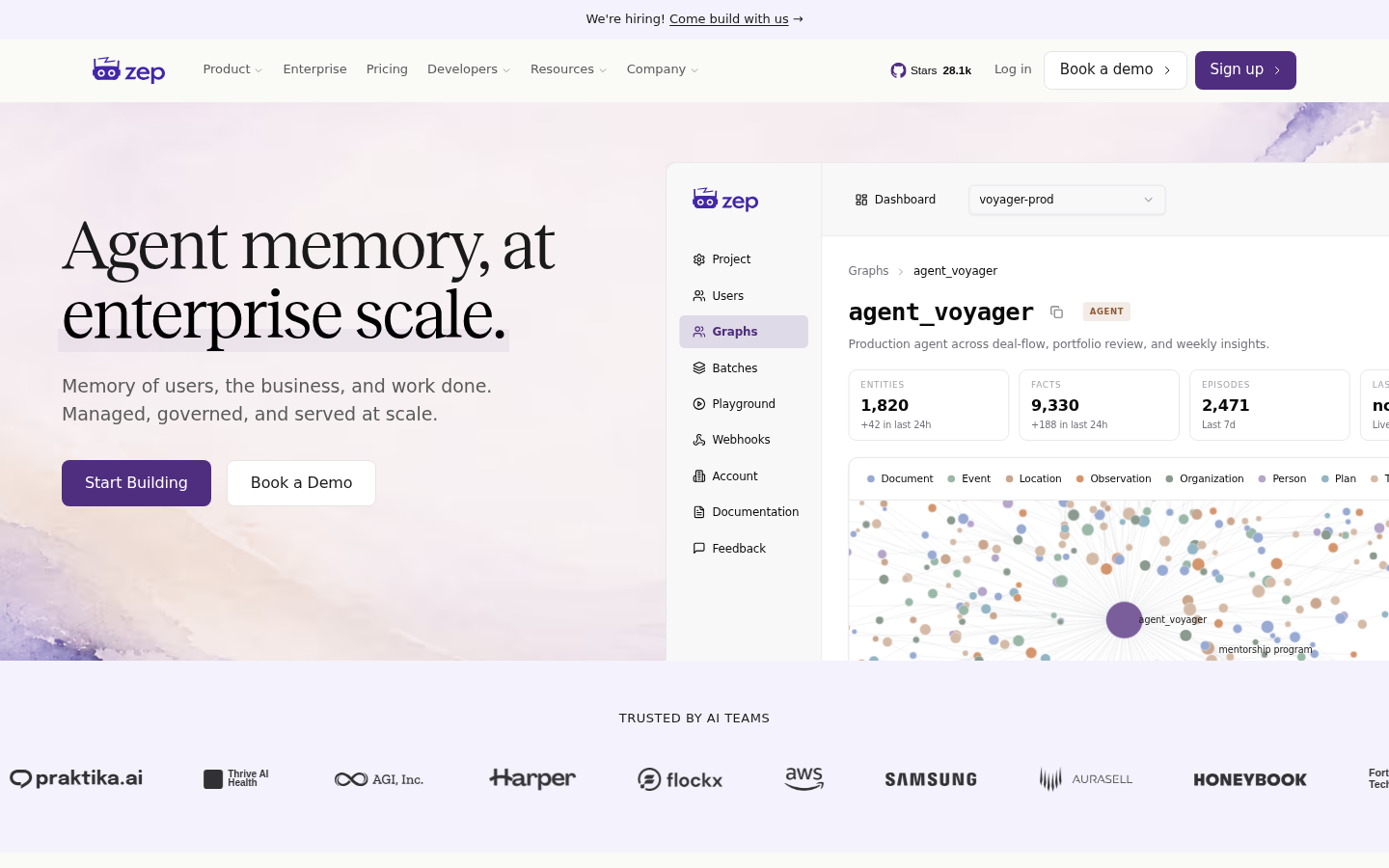
Screenshot archived from the listing page, for preview only.