ClusterView
AI keyword clustering for SEO teamsTurn keyword lists into topic clusters
Highlights
What you can do with it
- An e-commerce site clusters thousands of product keywords into topics like running shoes and running gear
- An SEO agency shows a client their topic authority on a keyword map and plans the next quarter
- Content marketers write articles that target gaps competitors have not covered
How to use it
- 1 Register for a free trial on the ClusterView website
- 2 Create a new project and enter the domain you want to analyze
- 3 Enter a core anchor keyword as the basis for clustering
- 4 Click Generate and wait while the AI crawls and groups keywords
- 5 Review traffic and difficulty per cluster, then export the report or start creating content
Who it is for
Pros
- Removes hours of manual keyword sorting
- Visual output is easy to show to clients
- Multi-domain support suits agency work
- Free trial available
Limitations
- Cluster quality depends on the keyword list and anchor you provide
- Full use requires a paid plan after the trial
- Search volume and difficulty are estimates, not guarantees of ranking
- Trial terms and plan limits may change
What ClusterView is
ClusterView is an AI-driven keyword clustering tool built for SEO professionals. Traditional keyword work means sorting thousands of terms by hand, which is slow and error prone, so ClusterView automates the grouping. You enter a core anchor keyword, and the system crawls and organizes related keywords by semantics and search intent into logical topic clusters. An interactive map then shows how those clusters relate, along with search volume and ranking difficulty, so you can see where topic authority already exists and where it is thin. Data refreshes weekly to keep ranking and traffic figures current. Beyond clustering, it suggests content topics, identifies gaps competitors have not covered, supports multiple domains for agencies, and allows team members to work in the same workflow. A free trial is available.
What you can do with it
- Turn a raw keyword list into structured topic clusters automatically
- Read cluster relationships, volume, and difficulty on one visual map
- Get content topic suggestions that follow from your clusters
- Find keyword gaps competitors have not covered
- Track several client domains from one account
Who it is for
- SEO professionals who work with large keyword sets
- Agencies that need clean reporting for multiple clients
- Content marketers who want topic ideas tied to real search data
- Site owners planning category and hub pages around topics
What to watch out for
Cluster quality depends heavily on the keyword list and anchor keyword you start with, so a poorly chosen anchor produces a poorly shaped map. Search volume and difficulty figures are estimates drawn from third-party data, and they are not a guarantee that a page will rank. Full use requires a paid plan after the free trial, and trial terms and limits can change. Treat the output as a planning aid that still needs editorial judgment, especially when deciding which clusters deserve a page of their own.
FAQ
How does the clustering work?
You enter an anchor keyword, and the AI crawls and groups related keywords by semantics and search intent into structured topic clusters.
What do I see in the interface?
An interactive keyword map shows how clusters relate, along with search volume and ranking difficulty, and the data refreshes weekly.
Can I manage several websites?
Yes, multiple domains can be created and tracked at the same time, which the site positions as useful for agencies.
Does it suggest what to write?
Yes, based on established clusters it generates topic ideas, and it also identifies keyword gaps that competitors have not covered.
Why it is free
What the official page says: free trial
Free limits, trial length and features are decided by the official site and can change at any time.
Product preview
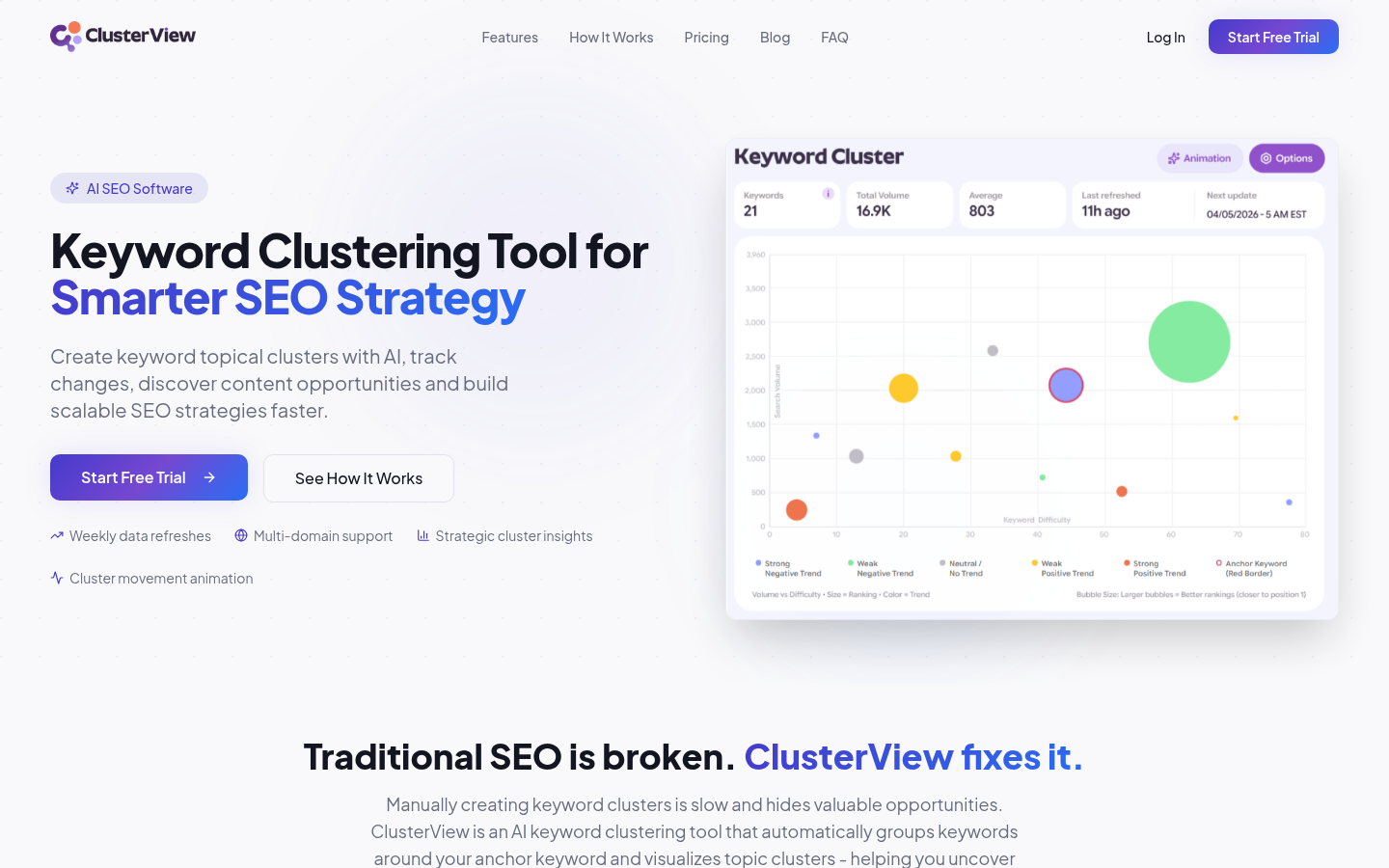
Screenshot archived from the listing page, for preview only.