INTELLECT-1
Decentralized 10B model trainingContribute compute, join the training
Highlights
What you can do with it
- Researchers training NLP models for text analysis
- Data scientists contributing compute for hands-on experience
- Educational institutions running real AI training exercises
How to use it
- 1 Register an account on the INTELLECT-1 site
- 2 Select and configure GPU instances for your needs
- 3 Create or join a multi-node cluster
- 4 Monitor and manage your instances from the management page
- 5 Use reserved instances during peak periods
- 6 Track training progress and key metrics
Who it is for
Pros
- Free trial lowers the entry cost
- Contributed compute reduces the barrier to large training runs
- Cluster and instance management are built in
- Real-time metrics make progress visible
Limitations
- Requires GPU resources and technical setup
- A free trial is temporary, not a permanent free tier
- Decentralized participation depends on network conditions
- Complex for anyone without infrastructure experience
What INTELLECT-1 is
INTELLECT-1 is a 10-billion parameter model based on the Llama-3 architecture, and it is trained through a decentralized network rather than a single datacenter. The premise is that anyone can contribute computing resources and participate in the training itself, which the vendor frames as lowering the barrier to large model training and encouraging global resource sharing. Access is through a web platform where you deploy GPU instances, create or join multi-node clusters, and manage individual instances. Reserved instances are available when you need guaranteed capacity, and intelligent analytics tools help tune the run. The platform currently offers free trials.
What you can do with it
- Deploy GPU instances to support training
- Create and manage multi-node computing clusters
- Monitor instance resource usage from a management page
- Reserve capacity for peak training periods
- Contribute your own compute and track progress in real time
- Watch performance metrics such as loss and perplexity
Who it is for
Researchers working on natural language processing models are the primary audience, since the platform exists to make that kind of training reachable. Data scientists who want hands-on distributed training experience can contribute compute and learn in the process. Educational institutions are an explicit use case, letting students run real training rather than toy examples. Anyone sitting on spare GPU capacity can contribute it and take part.
What to watch out for
This is infrastructure, not a consumer app. You need GPU resources and enough technical grounding to configure instances and clusters, and a decentralized network introduces variability that a single-provider service would not. The free trial is temporary; the listing does not describe what happens after it ends or what longer-term access costs. Treat the reward mechanism for contributed compute as promotional rather than a guaranteed return, and budget for the fact that large runs are expensive regardless of who supplies the hardware.
FAQ
What is INTELLECT-1?
A 10B parameter model based on the Llama-3 architecture, trained through a decentralized approach.
How do I take part?
Register, deploy or contribute GPU resources, then join a cluster and monitor the training run.
Is there a free trial?
Yes. The platform currently offers free trials so users can participate by contributing computing resources.
What metrics can I watch?
Real-time training progress plus performance indicators such as loss and perplexity.
Why it is free
What the official page says: free trial
Free limits, trial length and features are decided by the official site and can change at any time.
Product preview
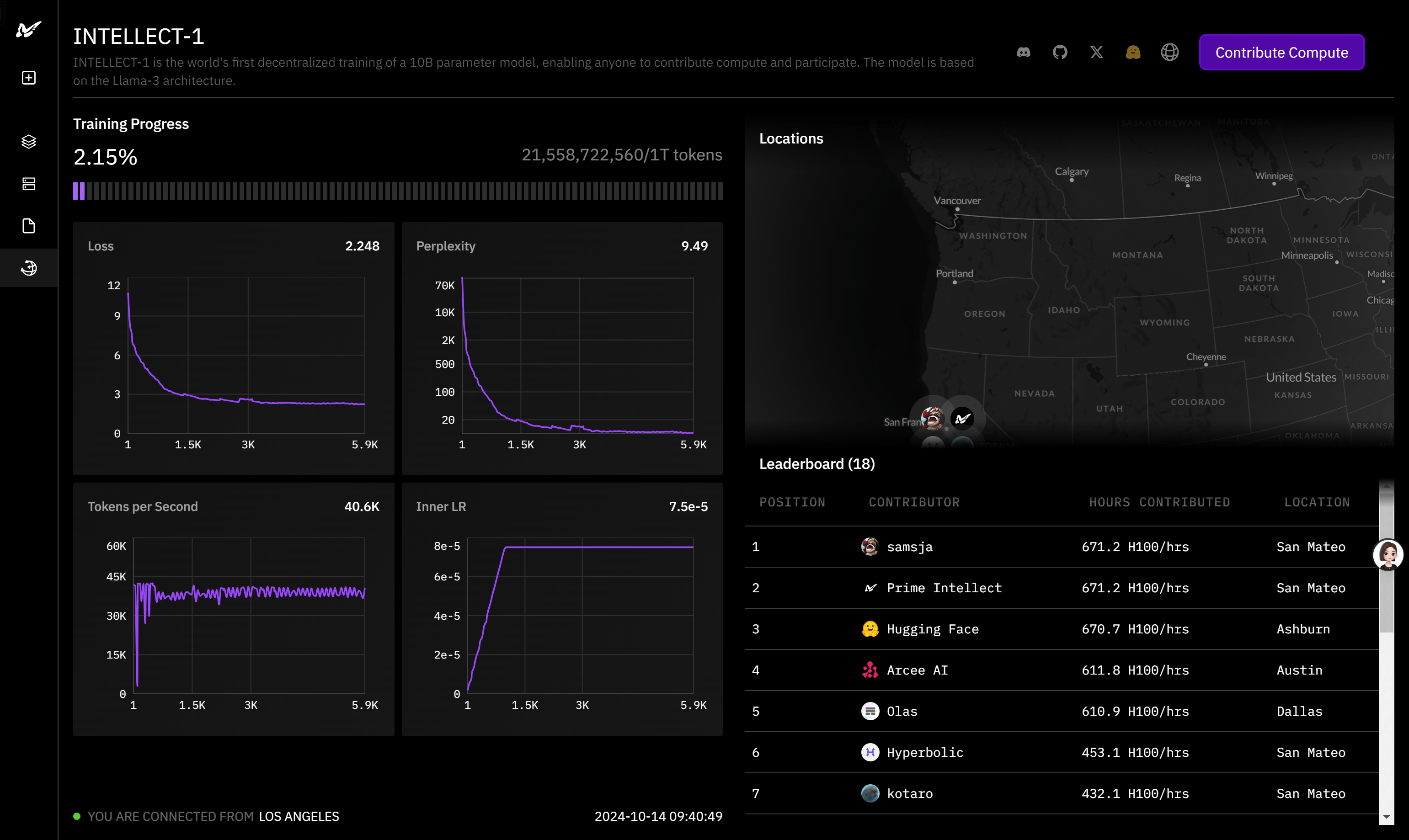
Screenshot archived from the listing page, for preview only.