VASA-1
Real time talking face modelAudio driven facial animation research
Highlights
What you can do with it
- A virtual teacher for an online education platform
- More realistic participant images in a video call
- Game characters with natural facial motion
How to use it
- 1 Follow the project page for current access details
- 2 Prepare the audio and the portrait you want to animate
- 3 Run the model to generate the facial animation
- 4 Review the output and adjust the inputs
- 5 Use the result inside your own project
Who it is for
Pros
- The site highlights highly realistic rendering
- It responds in real time to the audio input
- It comes from a research lab with deep learning backing
Limitations
- Pricing has not been announced and public availability may change
- It is a research project, so access can be limited or withdrawn
- Animating a real face without consent can break rules, and the responsibility sits with the user
What VASA-1 is
VASA-1 is a model from Microsoft Research focused on generating realistic facial animations synchronized with audio in real time. Using deep learning algorithms, it takes input speech and produces matching mouth movements and facial expressions, so a virtual character can look like it is really talking. The site highlights highly realistic rendering and real time responsiveness, and it points to virtual assistants, online education, and entertainment as the main application areas. Pricing has not been announced, and the page says a free trial version is expected for user experience.
What you can do with it
- Drive lip movement from an audio clip in real time.
- Add natural facial expressions to a static portrait.
- Build a virtual presenter or teacher for a course.
- Give game or call characters more lifelike motion.
Who it is for
- Researchers studying audio driven facial animation.
- Online education platforms that want a virtual teacher.
- Game and app developers who need expressive characters.
What to watch out for
This is a research project, so access terms, availability, and pricing can change or stay unclear for a long time. Do not plan a commercial product around it until the project page confirms stable access. Face animation also carries misuse risk, so only use images of people who have agreed, and follow the rules of any platform where the output is published. The consequences of misuse stay with the user. Behavior may vary across browsers and devices, so test before production use and consult the help docs if errors appear. Features and interface details may change between versions, so review the latest notes on the page before you start.
FAQ
Who built VASA-1?
It was developed by Microsoft Research.
Is it available to use?
The project page presents it as a research model, and availability details should be checked there.
What is it for?
The page lists virtual assistants, online education, and entertainment as the main application areas.
Does it cost anything?
Pricing has not been announced, and the page says a free trial version is expected for user experience.
Why it is free
What the official page says: free trial
Free limits, trial length and features are decided by the official site and can change at any time.
Product preview
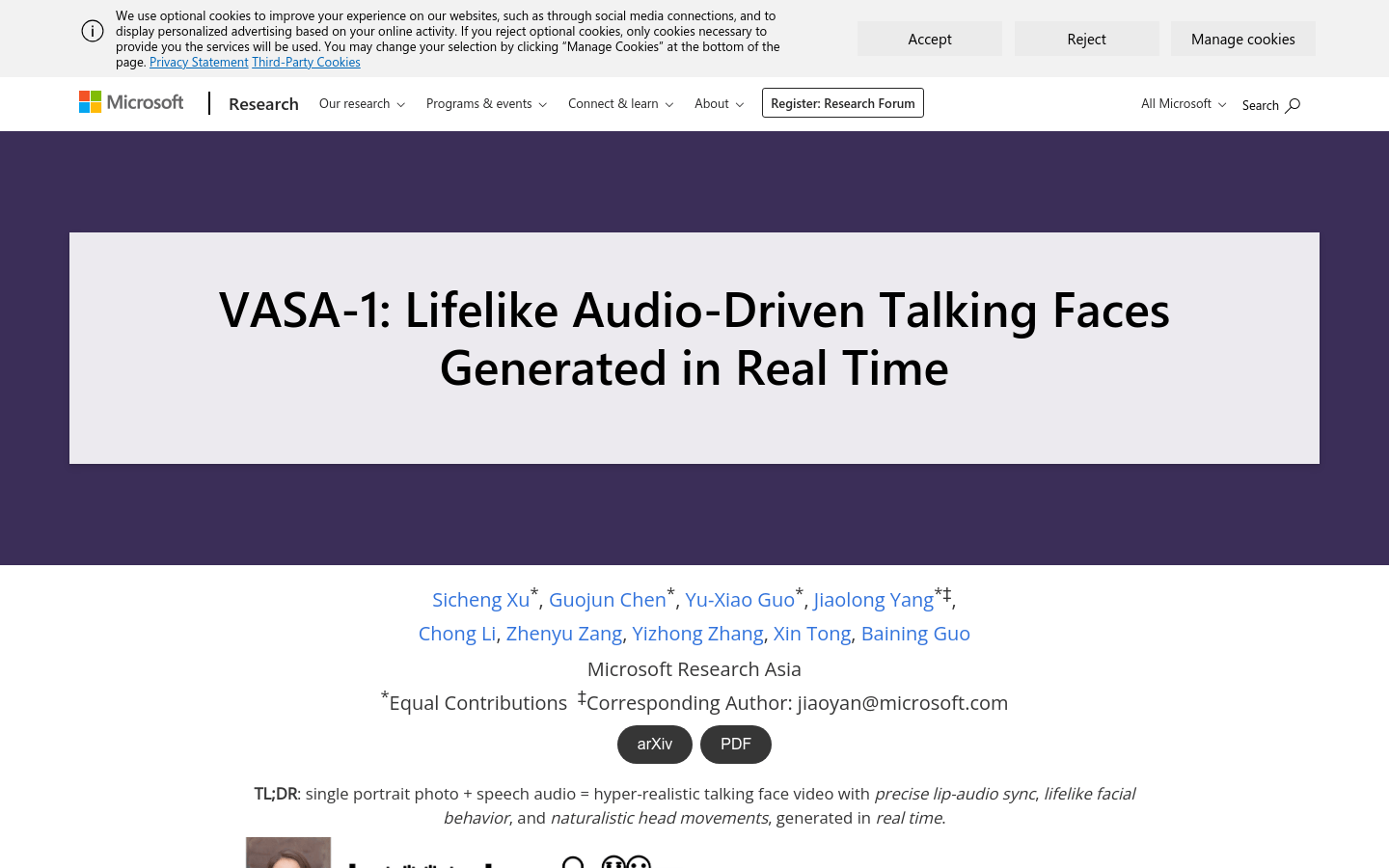
Screenshot archived from the listing page, for preview only.